Mirpur's door-to-door waste collection and composting scheme in Dhaka, assessed in 2001
In the al-Mufti district of Hasakah, in north-east Syria, a door-to-door waste collection round began in 2022. The Italian group Un Ponte Per, the Kurdish Red Crescent and the city's municipality have been building on it since. The project's page lists dates and partners but gives no figures on homes reached, tonnage or cost. The need it answers is easy to state. Across Syria, the UN's 2026 response plan counts more than 12 million people with limited access to basic water, sanitation, hygiene and solid waste services, and says more than 45 per cent of communities see waste pile up, either now and then or often.
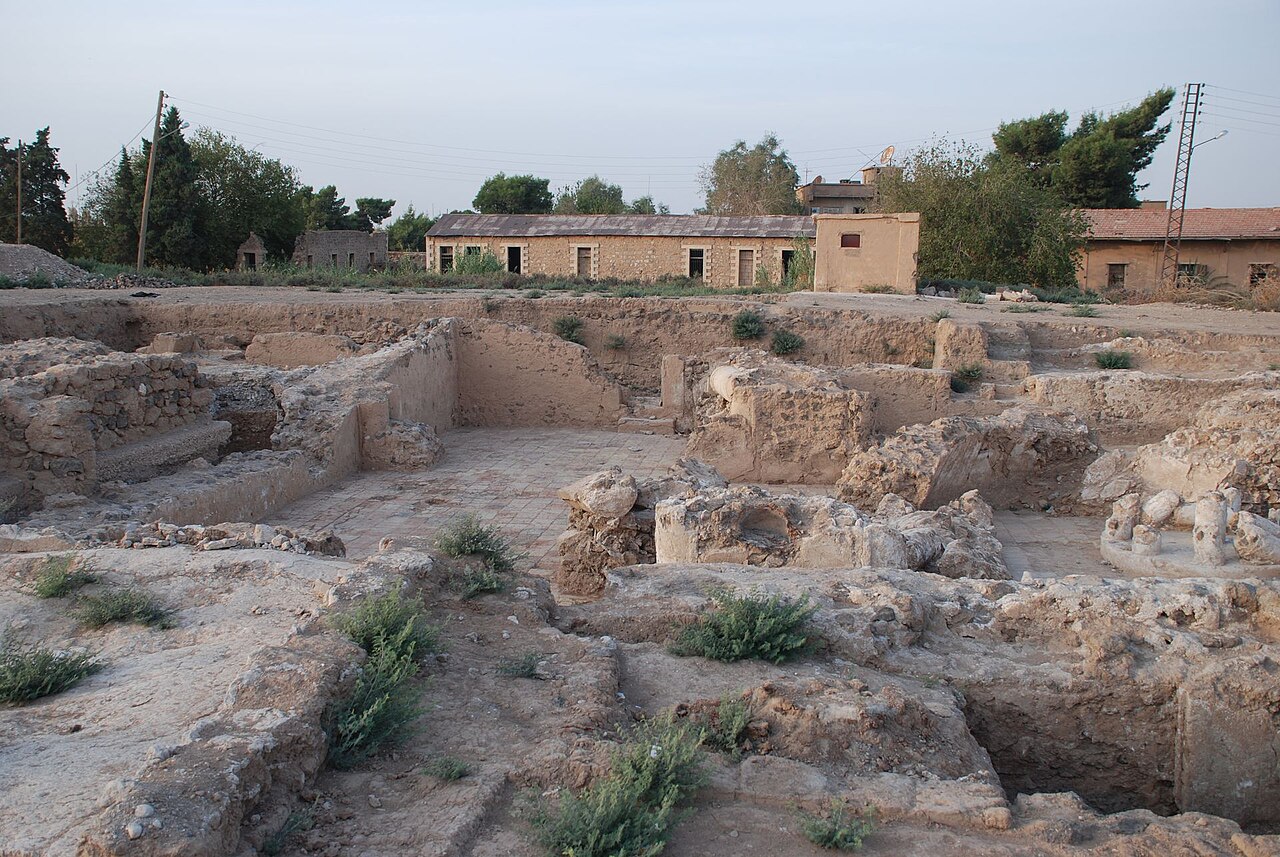
Excavated mound in the centre of Al-Hasakah, Syria, with utility poles beside it. Bertramz, CC BY 3.0, Wikimedia Commons.
A close relative of that kind of round was assessed in detail twenty-five years ago, in Dhaka. The assessment is old and small, and states its own limits.
Sixteen people and a yard
In 1995 Waste Concern, a Bangladeshi research-based NGO, started a pilot in the Mirpur housing estate. Collectors went to each home with a modified rickshaw van and took the waste to a composting yard inside the service area. At the yard it was sorted by hand. The organic part was piled to rot down, and the cardboard, glass, hard plastic and metal were sold, which gave the plant workers some extra income.
By early 2001 the round served 790 households. Each paid a monthly charge of 10 to 20 taka, set by what the family could afford. Sixteen people ran it, including ten on the plant, nine of them women.
Isabelle Rytz studied the scheme from January to March 2001 in a report issued by the Swiss institute SANDEC/EAWAG together with Waste Concern itself, so it is an outside assessment with the project's cooperation, not a fully arm's-length one. It is the source for almost everything below.
Eighty and twenty
Rytz asked 30 households in one corner of the estate. Eighty per cent of the households there used the service. The other twenty per cent gave their waste to a servant to put in a bin or drop in the street, because they did not want to pay for it.
Of those who used it, three-quarters (18 households) called the fee acceptable, and 12 of them said they would pay a little more for a better service. A quarter found it too high, some because they had heard that neighbours paid less. Eighty per cent of residents said they were satisfied. Odour from the yard was a nuisance, and the report puts its reach at about 25 metres from the site boundary.
Thirty households is a small sample, and all of them lived within a short walk of the yard.
The ledger did not close
The scheme did not yet pay its way. Rytz writes that "the Mirpur project is not viable at present", having started as a demonstration. It was handling 1.66 tons of waste a day against 3 tons at full capacity, and would have needed about 1,430 paying households rather than 790. The report expects it to become viable at full capacity, and adds that in Dhaka the land has to come free, because buying it would be too high an investment.
A later working paper by Sudhakar Yedla, based on interviews with the people involved, arrived at a similar list of conditions. It describes the model as labour-intensive and cheap in capital, with "promising employment generation", and says it suits cities where municipal collection is weak, where informal waste pickers already work and where there is enough demand for the compost. I could read only the paper's abstract, which reports no measured figures.
A UN summary of the later, much larger Dhaka composting plant adds one more detail: roughly 80 per cent of the city's waste was organic. That is why composting made sense there. That plant also earned a quarter of its revenue from carbon credits, so its books are not a guide to what a neighbourhood scheme costs.
What the Mirpur study could not say
Rytz measured one pile, in the dry season, over three months. She did not follow households over the years. Whether the model carries over to Syrian streets, with different waste, different fuel and transport costs and different ways of paying, is outside what her report covers.
Cash-for-work in Deir ez-Zor, from the fund's own account
A different route to the same problem was reported in 2021 by the Syria Recovery Trust Fund. Its second phase of solid waste work in Deir ez-Zor governorate ran for 15 months and cost EUR 2.7 million. The fund says nine villages received 800 bins, that almost 60,000 cubic metres of waste were collected and safely disposed of, and that 528 households had paid work in debris clearing, collection and dumpsite management. This is a press release by the funder: it counts what was done, and says nothing about whether collection continued once the money stopped.
What stays open
Two things are missing from every source above. One is how much of the waste in Syrian neighbourhoods is organic and so suitable for composting. The other is what households in Hasakah, Deir ez-Zor or elsewhere would be willing to pay for a regular round. Mirpur suggests that a modest fee and a sorting yard can coexist. It does not say for how long, or at what scale. Recent Syrian press reports on collection gaps could not be opened from here, so the account of current service rests on the UN plan alone.